You may begin today's class with the following prayer:
Create in me a pure heart, O my God, and renew a tranquil conscience within me, O my Hope! Through the spirit of power confirm Thou me in Thy Cause, O my Best-Beloved, and by the light of Thy glory reveal unto me Thy path, O Thou the Goal of my desire! Through the power of Thy transcendent might lift me up unto the heaven of Thy holiness, O Source of my being, and by the breezes of Thine eternity gladden me, O Thou Who art my God! Let Thine everlasting melodies breathe tranquillity on me, O my Companion, and let the riches of Thine ancient countenance deliver me from all except Thee, O my Master, and let the tidings of the revelation of Thine incorruptible Essence bring me joy, O Thou Who art the most manifest of the manifest and the most hidden of the hidden!
Bahá’u’lláh
Create in me a pure heart, O my God, and renew a tranquil conscience within me, O my Hope! Through the spirit of power confirm Thou me in Thy Cause, O my Best-Beloved, and by the light of Thy glory reveal unto me Thy path, O Thou the Goal of my desire! Through the power of Thy transcendent might lift me up unto the heaven of Thy holiness, O Source of my being, and by the breezes of Thine eternity gladden me, O Thou Who art my God! Let Thine everlasting melodies breathe tranquillity on me, O my Companion, and let the riches of Thine ancient countenance deliver me from all except Thee, O my Master, and let the tidings of the revelation of Thine incorruptible Essence bring me joy, O Thou Who art the most manifest of the manifest and the most hidden of the hidden!
Bahá’u’lláh
| | |
Once some of the children have also said prayers, you may review with them the prayer they have been memorizing in the last three classes. Since they will begin to learn a new prayer in today's lesson, you should make sure they can say the first one well.
As you introduce the new prayer for memorization, remember that is should be explained word by word. Where words are difficult, concrete examples should be given to illustrate their meaning. The children can spend five classes learning this prayer. Therefore, you can divide it into parts, helping them to gradually commit it to memory. By the fifth class, they all should be able to say the entire prayer.
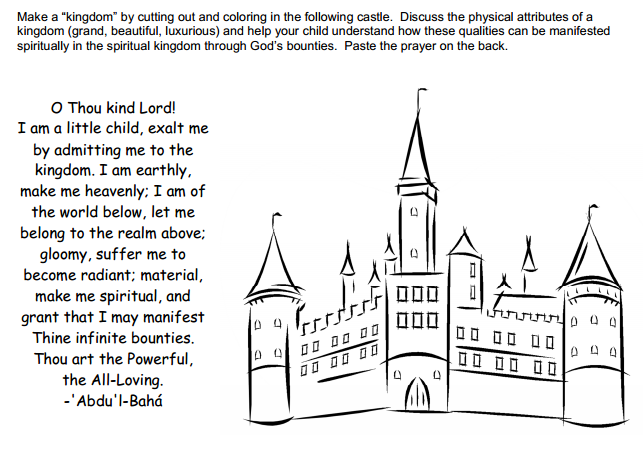
O Thou kind Lord! I am a little child, exalt me by admitting me to the kingdom. I am earthly, make me heavenly; I am of the world below, let me belong to the realm above; gloomy, suffer me to become radiant; material, make me spiritual, and grant that I may manifest Thine infinite bounties.
Thou art the Powerful, the All-Loving.
Listen HERE or HERE (same version as in the video below).
https://soulrisemelodies.bandcamp.com/track/i-am-a-little-child
As you introduce the new prayer for memorization, remember that is should be explained word by word. Where words are difficult, concrete examples should be given to illustrate their meaning. The children can spend five classes learning this prayer. Therefore, you can divide it into parts, helping them to gradually commit it to memory. By the fifth class, they all should be able to say the entire prayer.
O Thou kind Lord! I am a little child, exalt me by admitting me to the kingdom. I am earthly, make me heavenly; I am of the world below, let me belong to the realm above; gloomy, suffer me to become radiant; material, make me spiritual, and grant that I may manifest Thine infinite bounties.
Thou art the Powerful, the All-Loving.
Listen HERE or HERE (same version as in the video below).
https://soulrisemelodies.bandcamp.com/track/i-am-a-little-child
| | |
Moving on to the next activity, the children can learn to sing the following song and review the songs they have learned in previous lessons:
Truthful Words
A mirror that's covered up in dust
Cannot reflect the sun's bright light
A bird with wings all full of mud
Is unable to take flight
Chorus:
When all of our words are truthful
Our souls are able to progress
The foundation of all human virtues
We know is truthfulness
A ship cannot catch the wind
If it is using a torn sail
Eyes can't see the path ahead.
If they are covered up in veils
Repeat Chorus.
Truthful Words
A mirror that's covered up in dust
Cannot reflect the sun's bright light
A bird with wings all full of mud
Is unable to take flight
Chorus:
When all of our words are truthful
Our souls are able to progress
The foundation of all human virtues
We know is truthfulness
A ship cannot catch the wind
If it is using a torn sail
Eyes can't see the path ahead.
If they are covered up in veils
Repeat Chorus.
| | |
It is suggested that you explain the new quotation for the children to memorize in the following manner:
Truthfulness is one of the most essential spiritual qualities. We should never tell even the smallest lie. Why do people tell lies? Sometimes it is because they are afraid to tell the truth. Yet we all know that God is aware of all our actions and we cannot hide anything from Him. If we are not truthful, it will be very difficult for us to develop other virtues, and we will not attain nearness to God. Let us memorize the following quotation of Baha'u'llah:
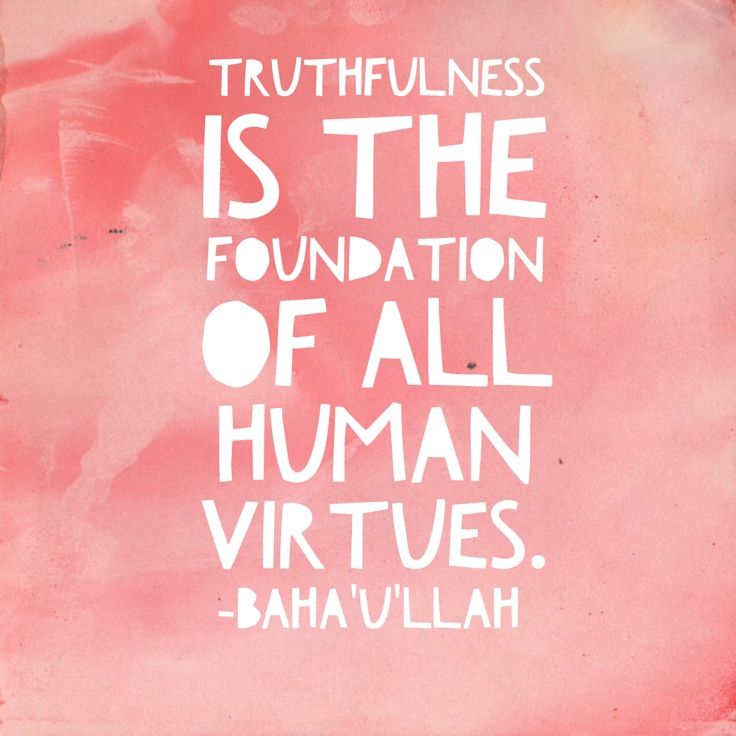
"Truthfulness is the foundation of all human virtues."
Put to music HERE.
Truthfulness is the foundation of all human virtues
One, let your eye be chaste
Two, your hand faithful
Three, your tongue truthful and your heart enlightened.
Truthfulness is one of the most essential spiritual qualities. We should never tell even the smallest lie. Why do people tell lies? Sometimes it is because they are afraid to tell the truth. Yet we all know that God is aware of all our actions and we cannot hide anything from Him. If we are not truthful, it will be very difficult for us to develop other virtues, and we will not attain nearness to God. Let us memorize the following quotation of Baha'u'llah:
"Truthfulness is the foundation of all human virtues."
Put to music HERE.
Truthfulness is the foundation of all human virtues
One, let your eye be chaste
Two, your hand faithful
Three, your tongue truthful and your heart enlightened.
Below are some sentences that will help you to explain the meaning of the words in the above quotation which the children may find difficult.
Truthfulness
1. Sanjay dropped a glass and broke it. When his mother asked him what had happened, he told her the truth and did not lie. Sanjay showed the virtue of truthfulness.
2. A friend wanted to play with Gita and went to her house to find her. Gita had homework and could not come out to play. Her brother said he would tell the friend that she was not home, but Gita did not want her brother to lie. Gita went outside and explained to her friend that she could not play because she had homework. Gita showed the virtue of truthfulness.
Foundation
1. Alok's father was building a house. Before putting up the walls, he placed rocks and cement under the place where the walls would go. The rocks and cement form the foundation of the house.
2. Before you learn to read and write you have to know the sounds of the letters. learning the sounds of the letters is a foundation for learning to read and write.
Virtues
1. Aurora is friendly, kind and joyful. Aurora possesses many virtues.
2. Mrs. Patel teaches the children about justice, generosity, humility, and honesty. These are some of the virtues that everyone should have.
[Quotations from other religions:
Buddhism: In whom are truth, virtue, harmlessness, restraint and control, that wise man who is purged of impurities, is, indeed, called an Elder. Dhammatthavagga
Judaism: [He that] speaketh truth showeth forth righteousness: Proverbs 12:17]
[Discuss: What truthfulness mean. Examples of how the children see truthfulness practiced in their daily lives. How truthfulness is practiced in your class. What various situations would look like without truthfulness. Why truthfulness is important.]
Truthfulness
1. Sanjay dropped a glass and broke it. When his mother asked him what had happened, he told her the truth and did not lie. Sanjay showed the virtue of truthfulness.
2. A friend wanted to play with Gita and went to her house to find her. Gita had homework and could not come out to play. Her brother said he would tell the friend that she was not home, but Gita did not want her brother to lie. Gita went outside and explained to her friend that she could not play because she had homework. Gita showed the virtue of truthfulness.
Foundation
1. Alok's father was building a house. Before putting up the walls, he placed rocks and cement under the place where the walls would go. The rocks and cement form the foundation of the house.
2. Before you learn to read and write you have to know the sounds of the letters. learning the sounds of the letters is a foundation for learning to read and write.
Virtues
1. Aurora is friendly, kind and joyful. Aurora possesses many virtues.
2. Mrs. Patel teaches the children about justice, generosity, humility, and honesty. These are some of the virtues that everyone should have.
[Quotations from other religions:
Buddhism: In whom are truth, virtue, harmlessness, restraint and control, that wise man who is purged of impurities, is, indeed, called an Elder. Dhammatthavagga
Judaism: [He that] speaketh truth showeth forth righteousness: Proverbs 12:17]
[Discuss: What truthfulness mean. Examples of how the children see truthfulness practiced in their daily lives. How truthfulness is practiced in your class. What various situations would look like without truthfulness. Why truthfulness is important.]
As the next activity, you can tell the following story that will help them think about the quality of truthfulness.
In a country far away, some time ago, there lived a young shepherd, who, while his father worked in the fields and his mother kept up the home, had the task of taking care of the family's sheep. One day, the boy felt very bored and decided to play a trick on his neighbours. Suddenly he started crying out, "Wolf! Wolf! The wolf is eating the sheep!" All of his friends came running to help chase away the wolf, but when they got there, they found the young shepherd laughing at them because they had received such a fright and really there was no wolf anywhere to be found. His friends went back to their work saying that the boy had behaved very badly.
The following day, the boy repeated his foolery. "Wolf! Wolf! Help me! Help me!" Some of the neighbours came running again to help, only to find the young shepherd laughing at them, because this time too it was a lie that a wolf was near. The third day, when they heard the boy call "Wolf! Wolf! The wolf is eating the sheep! Please come help!" no one paid any attention because they thought it was just another lie. That day, the wolf did come and eat the sheep! The young shepherd was very sad, but he had learned a good lesson. If we tell lies, the day will come when neither our parents, our brothers and sisters, nor out friends will believe what we say, even when it is the truth!
In a country far away, some time ago, there lived a young shepherd, who, while his father worked in the fields and his mother kept up the home, had the task of taking care of the family's sheep. One day, the boy felt very bored and decided to play a trick on his neighbours. Suddenly he started crying out, "Wolf! Wolf! The wolf is eating the sheep!" All of his friends came running to help chase away the wolf, but when they got there, they found the young shepherd laughing at them because they had received such a fright and really there was no wolf anywhere to be found. His friends went back to their work saying that the boy had behaved very badly.
The following day, the boy repeated his foolery. "Wolf! Wolf! Help me! Help me!" Some of the neighbours came running again to help, only to find the young shepherd laughing at them, because this time too it was a lie that a wolf was near. The third day, when they heard the boy call "Wolf! Wolf! The wolf is eating the sheep! Please come help!" no one paid any attention because they thought it was just another lie. That day, the wolf did come and eat the sheep! The young shepherd was very sad, but he had learned a good lesson. If we tell lies, the day will come when neither our parents, our brothers and sisters, nor out friends will believe what we say, even when it is the truth!
Slow to Tell the Truth -- adapted from a story told by 'Abdu'l-BahaThere was once a king who went out travelling about his kingdom in the clothes of a poor and humble man in order to observe the conditions of his people. Eventually he journeyed into the desert where he soon became tired, hot and thirsty. Luck was with him, however, and he reached the door of an Arab tent.
The Arab found him outside, exhausted from heat, thirst and hunger, and pulled him inside into the shade. When the king had revived he asked the Arab for food and drink, which was duly brought to him.
The king now regretted travelling in disguise and wished he was back in his palace. He wished to have the Arab help him to return, but fearing that the Arab would not believe him if he announced who he was straight away, he decided to broach the subject gradually.
"Do you know who I am?" he asked the Arab, as he ate.
"Indeed, no," replied the Arab.
"Then I must tell you that I am a soldier in the army of the king."
The Arab replied courteously that he was delighted to be able to help a brave man.
The king ate and drank some more.
"Do you really know who I am?" he asked again.
"No," replied the Arab, "who are you then, sir?"
"In reality, I am a minister of the king's council."
"I am honoured," replied the Arab graciously, "to be able to aid so distinguished a statesman."
A little more food and drink, and the king again asked: "Do you know who, in fact, I am?"
"Well, sir, tell me again," responded the Arab, with a sigh.
"Now I tell you, in very truth, I am the King himself!" proclaimed the king.
The Arab could stand it no, more. Rising to his feet, he took the food and drink from the king.
"Why are you doing that?" asked the king, astonished.
"Because," answered the Arab, patiently, "I am sure that if you eat and drink any more you will tell me next that you are a Prophet of God, and next that you are God, Almighty Himself. It is better, therefore, for you to stop now, before you tell me any more lies!"
(Adapted from a story told by ‘Abdu’l-Baha, Star of the West, vol. IX, no. 18, February 7, 1919; ‘Stories from the Star of the West’, compiled and edited by Andrew Gash)
The Arab found him outside, exhausted from heat, thirst and hunger, and pulled him inside into the shade. When the king had revived he asked the Arab for food and drink, which was duly brought to him.
The king now regretted travelling in disguise and wished he was back in his palace. He wished to have the Arab help him to return, but fearing that the Arab would not believe him if he announced who he was straight away, he decided to broach the subject gradually.
"Do you know who I am?" he asked the Arab, as he ate.
"Indeed, no," replied the Arab.
"Then I must tell you that I am a soldier in the army of the king."
The Arab replied courteously that he was delighted to be able to help a brave man.
The king ate and drank some more.
"Do you really know who I am?" he asked again.
"No," replied the Arab, "who are you then, sir?"
"In reality, I am a minister of the king's council."
"I am honoured," replied the Arab graciously, "to be able to aid so distinguished a statesman."
A little more food and drink, and the king again asked: "Do you know who, in fact, I am?"
"Well, sir, tell me again," responded the Arab, with a sigh.
"Now I tell you, in very truth, I am the King himself!" proclaimed the king.
The Arab could stand it no, more. Rising to his feet, he took the food and drink from the king.
"Why are you doing that?" asked the king, astonished.
"Because," answered the Arab, patiently, "I am sure that if you eat and drink any more you will tell me next that you are a Prophet of God, and next that you are God, Almighty Himself. It is better, therefore, for you to stop now, before you tell me any more lies!"
(Adapted from a story told by ‘Abdu’l-Baha, Star of the West, vol. IX, no. 18, February 7, 1919; ‘Stories from the Star of the West’, compiled and edited by Andrew Gash)
After telling the story above, you can have the children play the game "Touch Telephone" as the next activity of the day. Ask the children to stand in a line. They should all face in the same direction, with the last child looking at a piece of paper hanging on a wall or tree, if available, at a blackboard. More than one line can be organized, if necessary. Using your finger, draw something on the first child's back. He, in turn, draws it on the back of the second child. The second child draws it on the back of the third child, and so on, until the last child is reached who draws it on the paper/blackboard. Then you should draw next to it what you had drawn on the first child's back. The drawings should be simple so that all the children can do them.
[An addition/alternative to this
- "telephone game" (i.e. "Chinese Whispers - but losing the racist title). By tying the concept into truthfulness, you can say the more we repeat things without checking what the true story is, it's easy for the truth to be changed and to become not truthful.
- "two truths and a lie"
- "Truthfulness is the foundation Marshmallow Tower": Use new JUMBO size Kraft marshmallows and Food writers. Write letters T-R-U-T-H on Five marshmallows - use as foundation. Write virtue words on other marshmallows and stack on top. After the class has worked together on the tower they can have the marshmallows for a snack.]
[An addition/alternative to this
- "telephone game" (i.e. "Chinese Whispers - but losing the racist title). By tying the concept into truthfulness, you can say the more we repeat things without checking what the true story is, it's easy for the truth to be changed and to become not truthful.
- "two truths and a lie"
- "Truthfulness is the foundation Marshmallow Tower": Use new JUMBO size Kraft marshmallows and Food writers. Write letters T-R-U-T-H on Five marshmallows - use as foundation. Write virtue words on other marshmallows and stack on top. After the class has worked together on the tower they can have the marshmallows for a snack.]
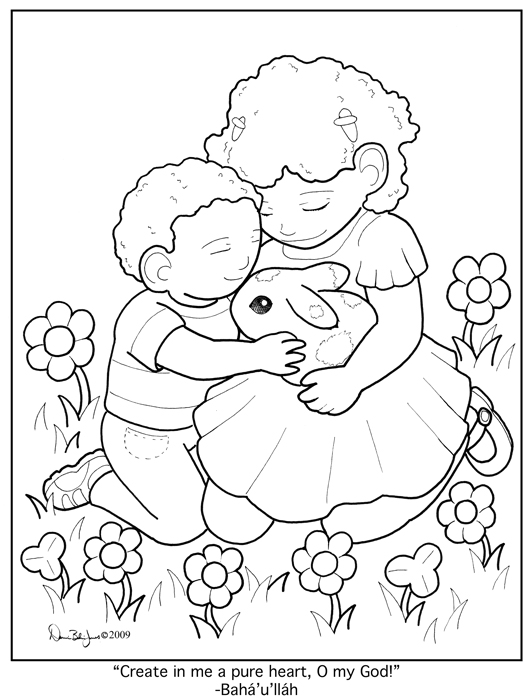
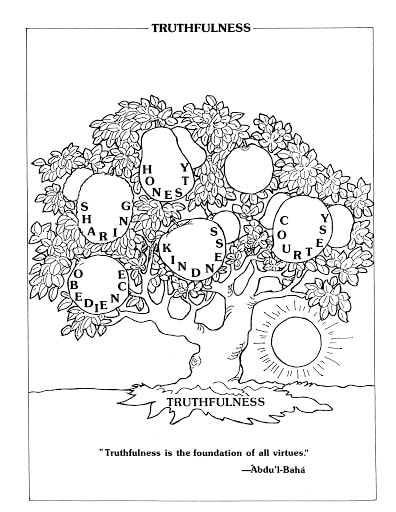
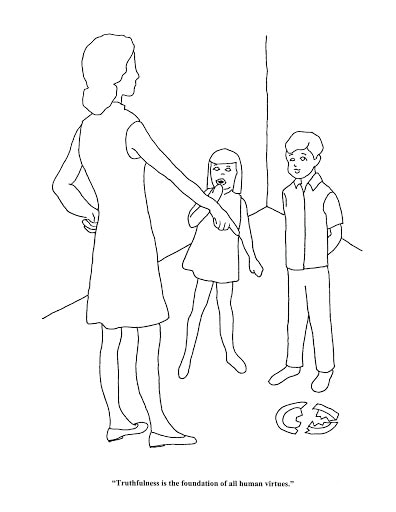
You can end the class with prayers after the children have coloured Drawing 4.
Extra activity idea (from the Wairarapa Childrens Class):
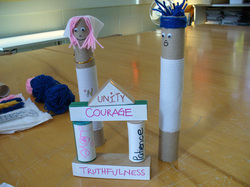
- To make various virtue blocks (Truthfulness being a solid block type shape), the others being triangles and tubes etc.
- two puppets
- puppet A is tired of people not telling the truth and begins to built a sculpture out of virtue blocks, with truthfulness as the foundation.
- puppet B walks past, and questions whether truthfulness is or isn't the best foundation upon which to build the virtue sculpture. He tries a few alternatives, but none of them give the same stability to the structure.
- They both end up building the sculpture together and the friend is convinced, while we need all those other virtues too – truthfulness is the foundation of all human virtues.
- To make various virtue blocks (Truthfulness being a solid block type shape), the others being triangles and tubes etc.
- two puppets
- puppet A is tired of people not telling the truth and begins to built a sculpture out of virtue blocks, with truthfulness as the foundation.
- puppet B walks past, and questions whether truthfulness is or isn't the best foundation upon which to build the virtue sculpture. He tries a few alternatives, but none of them give the same stability to the structure.
- They both end up building the sculpture together and the friend is convinced, while we need all those other virtues too – truthfulness is the foundation of all human virtues.
  |  |
 |  |
 RSS Feed
